AI and Automation in IT Help Desk Services: Transforming Support for UK Businesses
Artificial intelligence and automation are reshaping how UK organisations manage technical support. As infrastructure complexity increases and user expectations accelerate, traditional reactive service models are no longer sufficient to maintain operational continuity. Businesses now require faster response times, predictive insight, enhanced cybersecurity awareness, and measurable performance governance.
AI-driven systems and structured automation are redefining how an effective IT Help Desk operates. Rather than relying solely on manual ticket handling and reactive troubleshooting, modern support environments integrate machine intelligence to prevent downtime, prioritise incidents intelligently, and optimise operational workflows.
This article examines how AI and automation are transforming IT Help Desk services, outlines practical implementation considerations, identifies risks and governance requirements, and explores what UK decision-makers must evaluate when integrating intelligent support systems.
The Evolution of the Traditional IT Help Desk
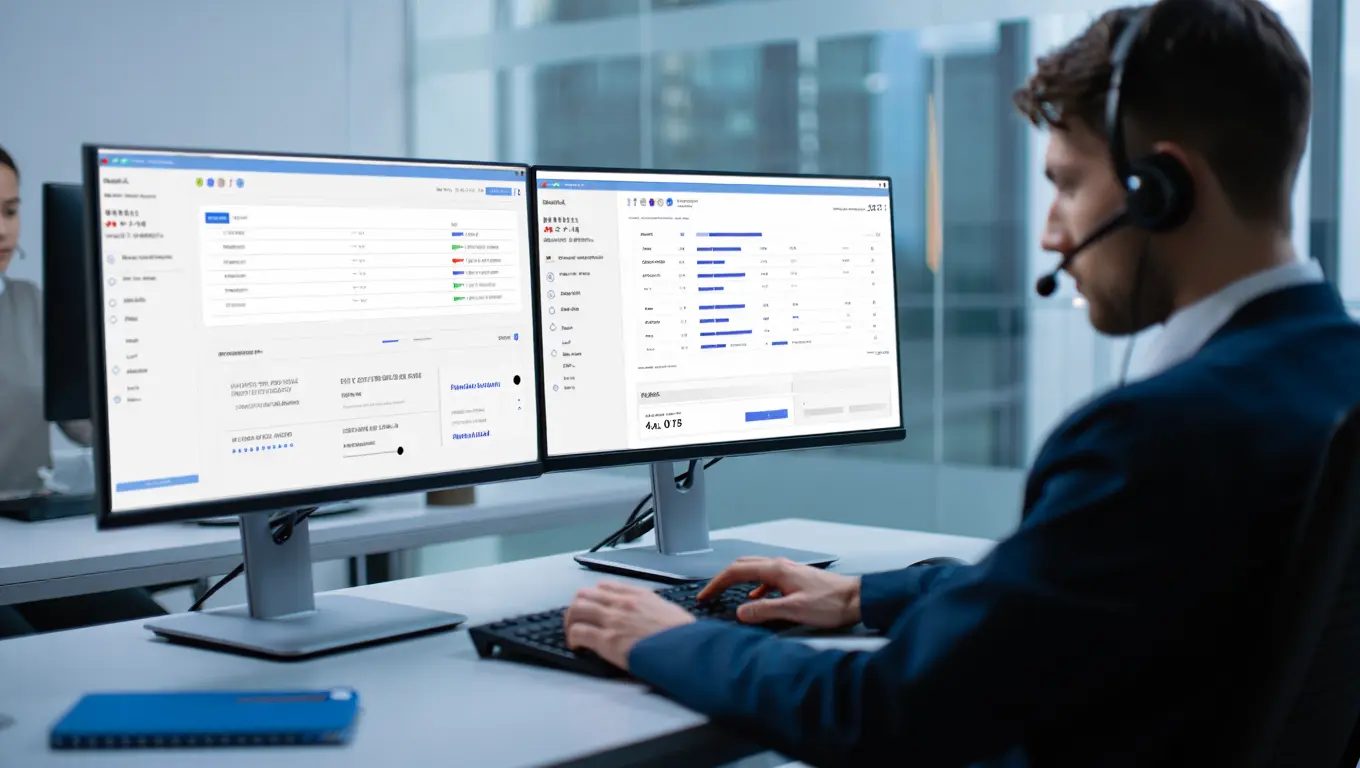
Historically, IT Help Desk services operated on a reactive model. Users experienced a problem, logged a ticket, and waited for resolution. While structured ticketing systems introduced order and accountability, they did not fundamentally eliminate downtime risk. Response still depended on human capacity and prioritisation decisions.
Today’s business environments are characterised by:
- Hybrid and remote workforces
- Cloud-dependent operations
- Increased cybersecurity threats
- Greater infrastructure complexity
- Elevated expectations for rapid resolution
Manual-only support structures struggle to maintain pace with this complexity. AI and automation provide a mechanism to enhance both efficiency and resilience. Information on how structured support reduces downtime can be found in our detailed guide.
Defining AI and Automation in IT Support
Artificial intelligence within IT support refers to systems capable of analysing data patterns, identifying anomalies, and performing decision-based actions without constant human input. Automation refers to predefined workflows that execute tasks based on specific triggers.
Together, these technologies enable:
- Automated ticket categorisation
- Intelligent prioritisation
- Predictive performance monitoring
- Automated remediation scripts
- Security threat detection
- Knowledge base recommendation engines
These capabilities significantly reduce response latency and manual workload.
Intelligent Ticket Classification and Prioritisation
One of the earliest and most impactful applications of AI in IT Help Desk services is automated ticket classification.
Traditional Model Challenges
Manual ticket triage introduces variability. Tickets may be misclassified, incorrectly prioritised, or delayed due to human workload. This increases downtime risk for critical incidents.
AI-Driven Classification
Machine learning models analyse historical ticket data and user behaviour to:
- Identify issue patterns
- Predict severity levels
- Assign appropriate priority categories
- Route tickets to suitable technical specialists
This ensures critical incidents are identified immediately and escalated without delay. Automated triage improves consistency and reduces resolution time across support environments.
Predictive Infrastructure Monitoring
Reactive monitoring detects issues after performance degradation has already impacted users. Predictive monitoring identifies early warning signals.
Pattern Recognition and Anomaly Detection
AI systems analyse metrics such as CPU utilisation trends, disk capacity growth patterns, network throughput anomalies, authentication irregularities, and patch failure frequency. Rather than relying solely on static thresholds, intelligent systems recognise abnormal patterns relative to baseline behaviour.
This allows intervention before system failure occurs.
Preventative Remediation
Automation can trigger predefined corrective actions, such as restarting stalled services, clearing temporary storage overload, deploying critical patches, and blocking suspicious IP addresses. These actions reduce downtime duration and prevent escalation.
AI-Enhanced Cybersecurity Integration
Cybersecurity threats are a primary cause of prolonged downtime in UK organisations. AI integration strengthens incident detection and containment.
Threat Detection Acceleration
Machine learning models analyse login behaviour anomalies, unusual data transfer patterns, privilege escalation attempts, and suspicious network activity. Early detection allows containment before widespread system compromise occurs.
Automated Containment Procedures
Automation workflows can isolate affected devices, revoke compromised credentials, disable suspicious accounts, and initiate forensic logging. Reducing manual delay is critical during active security incidents. Exploring the future of IT support reveals how these security integrations will become even more sophisticated.
Intelligent Self-Service Portals and Virtual Assistants
AI-powered virtual assistants reduce routine ticket volume by resolving common issues automatically.
Knowledge-Based Recommendations
When users submit support requests, AI systems analyse request language and suggest relevant knowledge base articles before escalation. This enables resolution of password resets, software installation guidance, basic configuration issues, and device connectivity troubleshooting.
Reducing repetitive manual intervention preserves technical capacity for higher priority incidents.
Conversational Support Agents
Intelligent chat interfaces guide users through structured troubleshooting flows, escalating to human specialists only when necessary. This approach improves efficiency while maintaining user satisfaction.
Operational Efficiency Gains Through Automation
Automation enhances consistency across repetitive tasks that traditionally consumed technical resources.
Patch Deployment Scheduling
Automated patch management ensures consistent system updates across endpoints and servers without manual intervention. This reduces security vulnerability and instability caused by inconsistent update cycles.
Account Provisioning and Deprovisioning
Automated workflows standardise onboarding and offboarding processes, ensuring correct permissions are applied, access is revoked promptly upon employee departure, and compliance documentation is maintained.
Risks and Governance Considerations
While AI and automation enhance support capability, they introduce governance considerations that must be managed carefully.
Over-Reliance on Automation
Excessive dependence on automated remediation without human oversight can result in unintended consequences if systems misinterpret data patterns. Organisations must ensure oversight mechanisms are in place, escalation triggers include human review, and automation rules are regularly audited.
Data Privacy and Compliance
AI systems process large volumes of user and system data. UK organisations must ensure compliance with GDPR requirements related to data processing and retention.
Bias and Misclassification Risk
Machine learning models rely on historical data. Poor-quality or incomplete data sets may produce incorrect prioritisation or classification outcomes. Ongoing monitoring and refinement of AI models are necessary to maintain accuracy.
Integrating AI into Existing IT Help Desk Frameworks
AI adoption should be phased and aligned with operational maturity.
- Step 1: Establish Structured Governance: Automation cannot compensate for disorganised processes. Organisations must first ensure structured ticketing, defined response standards, and documented escalation pathways.
- Step 2: Introduce Monitoring Automation: Begin with infrastructure monitoring and alert automation. This creates immediate downtime reduction impact.
- Step 3: Implement Intelligent Triage: Deploy AI-based ticket classification once sufficient historical data exists to train predictive models.
- Step 4: Integrate Cybersecurity Intelligence: Enhance detection and containment frameworks with machine learning-based anomaly recognition.
Financial Evaluation of AI-Enhanced Support
AI and automation introduce investment considerations. Decision-makers should evaluate downtime reduction potential, labour efficiency gains, cyber risk mitigation value, and compliance exposure reduction. In many cases, predictive monitoring and intelligent triage significantly reduce resolution time, offsetting investment through productivity preservation.
Supporting Growth and Scalability
As UK SMEs scale, infrastructure complexity increases. AI-driven automation enables support environments to scale without proportional increases in manual staffing. This is particularly valuable for organisations experiencing workforce expansion, multi-site deployment, cloud service proliferation, and increased remote access requirements.
The Strategic Role of AI in Future IT Help Desk Services
Future-ready IT support models will increasingly integrate predictive analytics, real-time behavioural monitoring, automated compliance reporting, and AI-driven workload balancing. These enhancements will shift IT Help Desk services from reactive troubleshooting units to strategic operational governance partners.
Conclusion
AI and automation are transforming IT Help Desk services by enhancing response speed, reducing manual workload, strengthening cybersecurity posture, and preventing downtime through predictive insight. When integrated within disciplined governance frameworks, these technologies deliver measurable resilience improvements.
Take the Next Step With Managed IT Security Services
Protect Your Business With Trusted Managed IT Security Services
Cyber threats are a business reality for SMEs, but they do not need to be faced alone. Managed IT Security Services provide structured oversight, professional expertise, and continuous monitoring aligned with how smaller organisations operate.
If your organisation is reviewing its cybersecurity approach or seeking greater confidence in its defences, working with experienced Managed IT Security Services specialists can support informed decisions. Take action by reaching out through a professional contact form to discuss how managed security can support your business goals.
Contact Us Today