Common Mistakes to Avoid When Choosing Outsourced IT Support Services
Outsourced IT support services are widely recognised as a more efficient and scalable model, yet a significant number of businesses fail to realise the full benefits. The issue is not the model itself. It is execution. Companies approach outsourcing with the wrong expectations, poor selection criteria, and weak internal alignment. As a result, they recreate the same inefficiencies they were trying to eliminate, only now with an external provider.
This creates a dangerous narrative. Leaders conclude that outsourcing does not work, when in reality they never implemented it correctly. The gap between potential and outcome is driven by a small number of critical mistakes. These mistakes are predictable, repeatable, and avoidable. Understanding them is not optional. It is the difference between outsourcing as a growth lever and outsourcing as an operational liability.
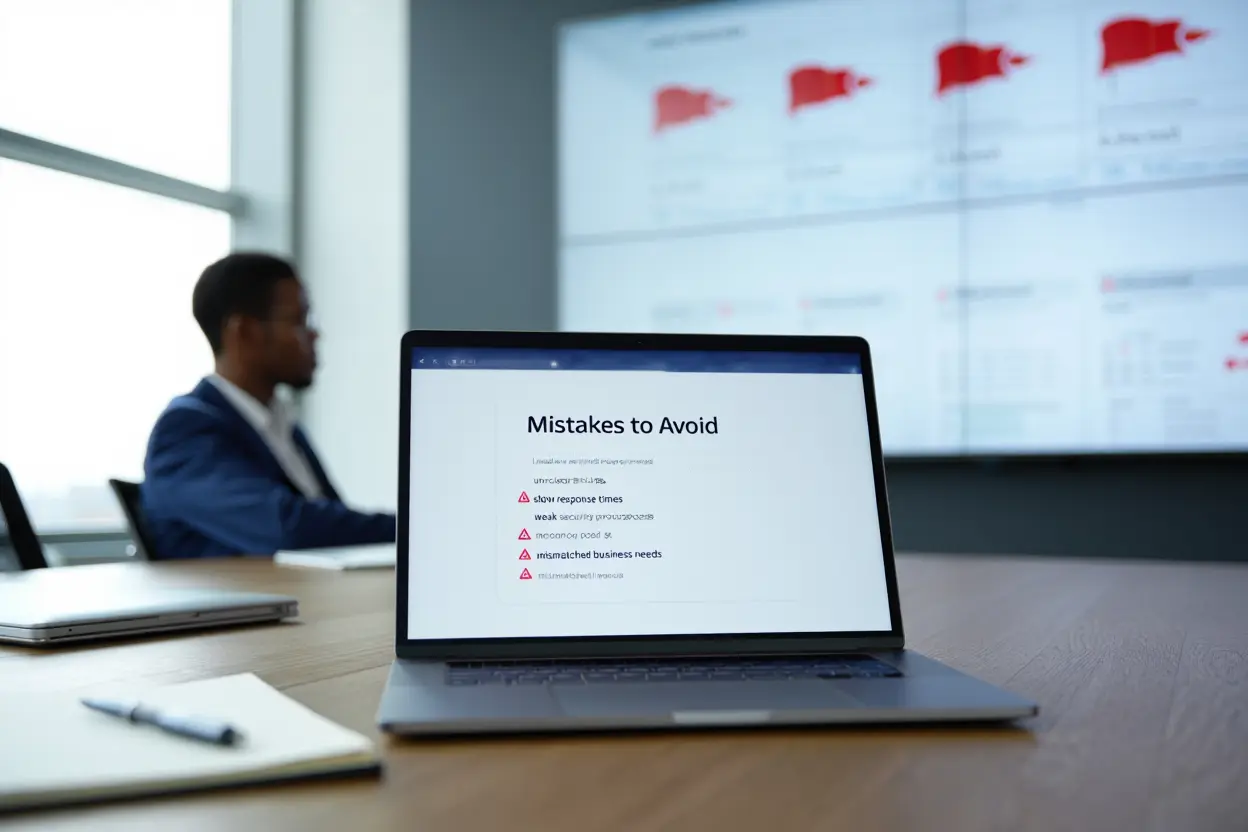
Treating Outsourcing as a Cost-Cutting Exercise Only
The most common mistake is approaching outsourcing with a narrow focus on cost reduction. Businesses look for the cheapest provider, negotiate aggressively on price, and expect similar or better performance than their internal team.
This approach almost always fails. Lower-cost providers typically operate with limited resources, weaker processes, and reduced accountability. Response times slow down, communication becomes inconsistent, and issues take longer to resolve. The business saves money on paper but loses it through inefficiency, downtime, and internal frustration.
Outsourcing is not about removing cost. It is about improving how cost is structured and how effectively resources are used. When businesses prioritise price over performance, they undermine the entire purpose of outsourcing.
Failing to Define Clear Objectives and Success Metrics
Outsourcing without clear objectives is equivalent to delegating responsibility without accountability. Many businesses engage providers without defining what success looks like. They expect improvements but cannot measure them.
This leads to misalignment. The provider focuses on delivering basic support functions, while the business expects strategic value. Over time, frustration builds because expectations were never clearly established.
Effective outsourcing requires defined objectives. These may include response times, system uptime, user satisfaction, security standards, or process improvements. Without measurable criteria, it is impossible to evaluate performance or hold the provider accountable.
Clarity at the outset prevents ambiguity later.
Poor Communication Structures and Lack of Oversight
Outsourcing does not eliminate the need for management. It changes the nature of it. Businesses that assume providers will operate independently without oversight often encounter issues with communication, prioritisation, and alignment.
Common symptoms include delayed responses, unresolved issues, and confusion around responsibilities. These are not necessarily signs of an incompetent provider. They are often the result of weak communication structures.
Effective outsourcing requires structured communication. This includes regular reporting, clear escalation paths, and defined points of contact. The business must remain engaged, not in day-to-day execution, but in maintaining alignment with strategic objectives.
Without this structure, outsourcing becomes reactive rather than proactive.
Selecting Providers Without Evaluating Capability Depth
Many businesses evaluate providers based on surface-level criteria such as pricing, basic service offerings, or sales presentations. They fail to assess the depth of capability behind the service.
This creates risk. A provider may appear competent in handling basic support tasks but lack the expertise required for more complex issues such as cybersecurity, infrastructure optimisation, or system integration.
When these issues arise, the provider struggles to deliver, forcing the business to seek additional support or accept suboptimal solutions.
A proper evaluation must go beyond marketing claims. It should examine the provider’s technical depth, experience across different environments, and ability to handle both routine and complex challenges. Capability depth determines long-term value.
Ignoring Integration with Internal Processes
Outsourced IT support does not operate in isolation. It must integrate with the business’s existing processes, workflows, and systems. When this integration is overlooked, inefficiencies emerge.
Tasks may be duplicated. Information may not flow correctly between teams. Internal staff may not understand how to interact with the provider. This creates friction that reduces the effectiveness of outsourcing.
Successful implementation requires alignment between external support and internal operations. Processes must be documented, roles must be clearly defined, and systems must be configured to work together.
Without integration, outsourcing becomes an additional layer rather than a solution.
Over-Reliance Without Strategic Alignment
While outsourcing reduces the need for internal technical management, it does not eliminate the need for strategic oversight. Some businesses make the mistake of delegating all IT-related decisions to the provider.
This creates dependency. The provider becomes the sole source of direction, which may not always align with the business’s long-term objectives. Decisions are made based on technical considerations rather than commercial priorities.
Outsourcing should function as a partnership. The provider contributes expertise, but the business retains control over strategy. Alignment between technical decisions and business goals is essential for achieving meaningful results.
Underestimating Transition Complexity
The transition from internal IT to outsourced support is not instantaneous. It involves transferring knowledge, restructuring processes, and integrating systems. Businesses that underestimate this complexity often experience disruption during the transition period.
Common issues include incomplete documentation, unclear responsibilities, and temporary declines in service quality. These are not failures of outsourcing, but consequences of poor transition planning.
A structured transition process is critical. This includes detailed knowledge transfer, system audits, and phased implementation. When handled properly, the transition strengthens the operational foundation rather than weakening it.
Neglecting Security and Compliance Considerations
Security is often treated as a secondary concern during outsourcing decisions. Businesses focus on support capabilities and cost while overlooking the importance of security frameworks and compliance standards.
This creates significant risk. If the provider lacks robust security protocols, the business becomes vulnerable to data breaches, regulatory violations, and operational disruption.
Outsourced IT support services must include comprehensive security measures. This involves continuous monitoring, access control, data protection, and compliance with relevant regulations. Security is not an optional feature. It is a core requirement.
Businesses working with outsourced IT support services should ensure that security is integrated into the service model rather than treated as an add-on.
Expecting Immediate Results Without Long-Term Commitment
Outsourcing is not a quick fix. It is a structural change that delivers value over time. Businesses that expect immediate transformation often become dissatisfied when results are not instantaneous.
Initial improvements may include faster response times and better issue resolution. However, deeper benefits such as system optimisation, cost efficiency, and strategic alignment require time to develop.
Patience is essential. Outsourcing should be viewed as a long-term investment rather than a short-term solution. Businesses that commit to the process are more likely to achieve sustainable improvements.
Failing to Review and Optimise the Relationship
Outsourcing is not a set-and-forget solution. It requires ongoing evaluation and optimisation. Businesses that fail to review performance regularly may miss opportunities for improvement.
Regular reviews allow both the business and the provider to assess what is working, identify areas for enhancement, and adjust strategies accordingly. This ensures that the service continues to align with evolving needs.
Without review, performance stagnates. The relationship becomes transactional rather than strategic, limiting its potential value.
The Commercial Impact of Getting It Right vs Getting It Wrong
The difference between successful and failed outsourcing is not marginal. It is structural. When executed correctly, outsourcing reduces operational cost, improves efficiency, enhances security, and supports growth.
When executed poorly, it introduces new inefficiencies, increases frustration, and can even amplify existing problems. The same model produces radically different outcomes depending on how it is implemented.
This is why understanding these mistakes is critical. Avoiding them is not just about improving IT operations. It is about protecting the overall performance of the business.
Conclusion
Outsourced IT support services offer significant advantages, but only when implemented with clarity, structure, and strategic intent. The most common mistakes stem from treating outsourcing as a simple transaction rather than a complex operational shift.
Businesses that focus solely on cost, neglect communication, ignore integration, or fail to define objectives are likely to experience disappointing results. Those that approach outsourcing as a strategic partnership, with clear expectations and ongoing oversight, unlock its full potential.
The difference lies in execution. Avoiding these mistakes ensures that outsourcing becomes a driver of efficiency and growth rather than a source of new challenges.
For organisations ready to approach outsourcing with the structure and clarity required for success, the next step is to contact us and explore how a properly implemented support model can deliver long-term value.
Take the Next Step With Managed IT Security Services
Protect Your Business With Trusted Managed IT Security Services
Cyber threats are a business reality for SMEs, but they do not need to be faced alone. Managed IT Security Services provide structured oversight, professional expertise, and continuous monitoring aligned with how smaller organisations operate.
If your organisation is reviewing its cybersecurity approach or seeking greater confidence in its defences, working with experienced Managed IT Security Services specialists can support informed decisions. Take action by reaching out through a professional contact form to discuss how managed security can support your business goals.
Contact Us Today